FOOD, FREEDOM, AND REGULATION: A SOCIO-LEGAL ANALYSIS OF THE UNITED STATES
Subjects/Theme:
food regulation, food policy, social work, nutritional justice, paternalism, food sovereignty, SNAP, public health lawDescription
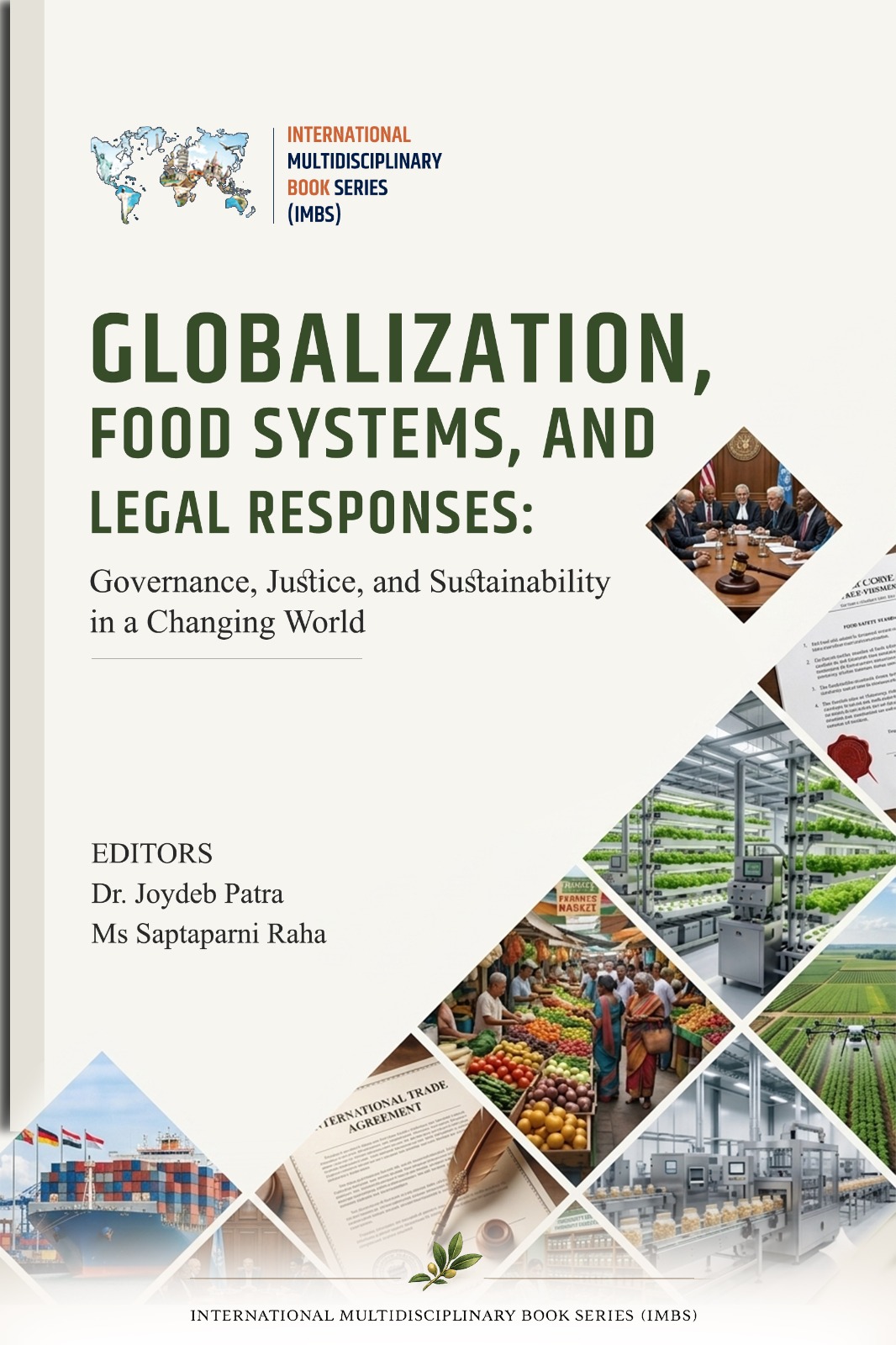
Globalization, Food Systems, and Legal Responses:Governance, Justice, and Sustainability in a Changing World
Edited By: Dr. Joydeb Patra, Ms. Saptaparni Raha
E-ISBN: 978-81-685212-2-3
The regulation of food in the United States represents one of the most contested intersections of individual liberty, public health, and governmental authority. This review examines the socio-legal dimensions of food regulation through the lens of social work practice and observation, situating contemporary debates within historical patterns of state intervention, market dynamics, and community resistance. Drawing on legal scholarship, public health literature, and critical social work theory, this analysis traces the evolution of food governance from early sanitation laws through modern controversies surrounding raw milk, dietary supplements, and food assistance programs. The review argues that food regulation operates as a site of profound social stratification, where access to nutritional choice functions as both a privilege of class position and a marker of citizenship status. Examining case studies including the Supplemental Nutrition Assistance Program restrictions, municipal soda taxes, and the regulation of small-scale food production, this paper reveals tensions between paternalistic state interventions and community self-determination. The analysis foregrounds the experiences of marginalized populations—low-income families, rural communities, immigrant groups, and Indigenous nations—whose food practices face disproportionate regulatory scrutiny while their nutritional needs remain inadequately addressed. The review concludes by proposing a social work framework for food policy engagement that balances harm reduction principles with respect for bodily autonomy, cultural food traditions, and the structural determinants of nutritional outcomes. This framework emphasizes community-centered approaches to food governance that challenge both market failures and regulatory overreach.