THE RIGHT TO FOOD AS AN ENFORCEABLE ENTITLEMENT: INTERNATIONAL NORMS, CONSTITUTIONAL PRACTICE, AND STRUCTURAL CHALLENGES
Subjects/Theme:
Right To Food, Food Justice, Constitutional Socioeconomic Rights, Food Sovereignty, Trade LiberalizationDescription
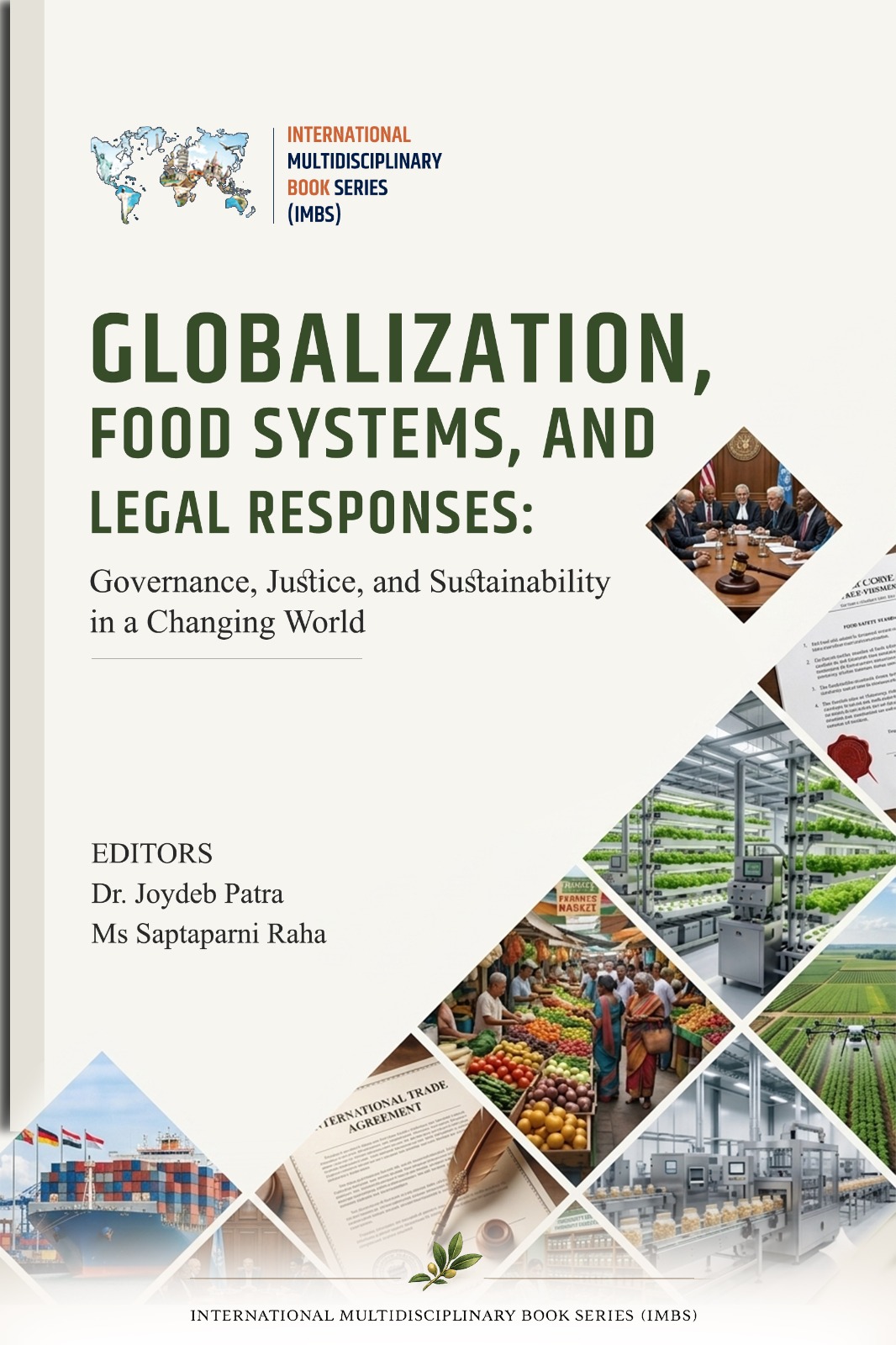
Globalization, Food Systems, and Legal Responses:Governance, Justice, and Sustainability in a Changing World
Edited By: Dr. Joydeb Patra, Ms. Saptaparni Raha
E-ISBN: 978-81-685212-2-3
Persistent hunger in a world of agricultural abundance reveals structural failures of governance, distribution, and accountability rather than mere deficits in food production. This chapter critically examines the evolution of the right to food as a legal and normative framework for addressing these failures, tracing its development from foundational international human rights instruments to contemporary treaty obligations, constitutional protections, and judicial interpretation. Using doctrinal analysis and comparative constitutional inquiry, the chapter analyzes the tripartite state obligations to respect, protect, and fulfill the right to food, while evaluating how courts in different jurisdictions have transformed these obligations into enforceable socio-economic entitlements. The chapter further situates food rights within broader structural constraints, examining how trade liberalization, corporate concentration, inequality, and climate disruptions challenge the realization of rights-based food governance. It argues that while the right to food has gained increasing normative and constitutional recognition, implementation deficits persist due to tensions between legal commitments and political-economic structures. To address this gap, the chapter develops a five-pillar food justice framework integrating legal enforceability, participatory governance, political-economic reform, corporate accountability, and ecological sustainability. By bridging human rights law with contemporary food sovereignty and justice scholarship, the chapter contributes a multidimensional framework for rethinking the right to food beyond food security discourse toward transformative and equitable food system governance.