THE RIGHT TO FOOD IN A GLOBALIZED WORLD: HUMAN RIGHTS, CONSTITUTIONALISM, AND LEGAL RESPONSES TO FOOD INJUSTICE
Subjects/Theme:
Right to food, food justice, globalization, constitutional law, human rights, food governance, sustainability, social justice, food security, international lawDescription
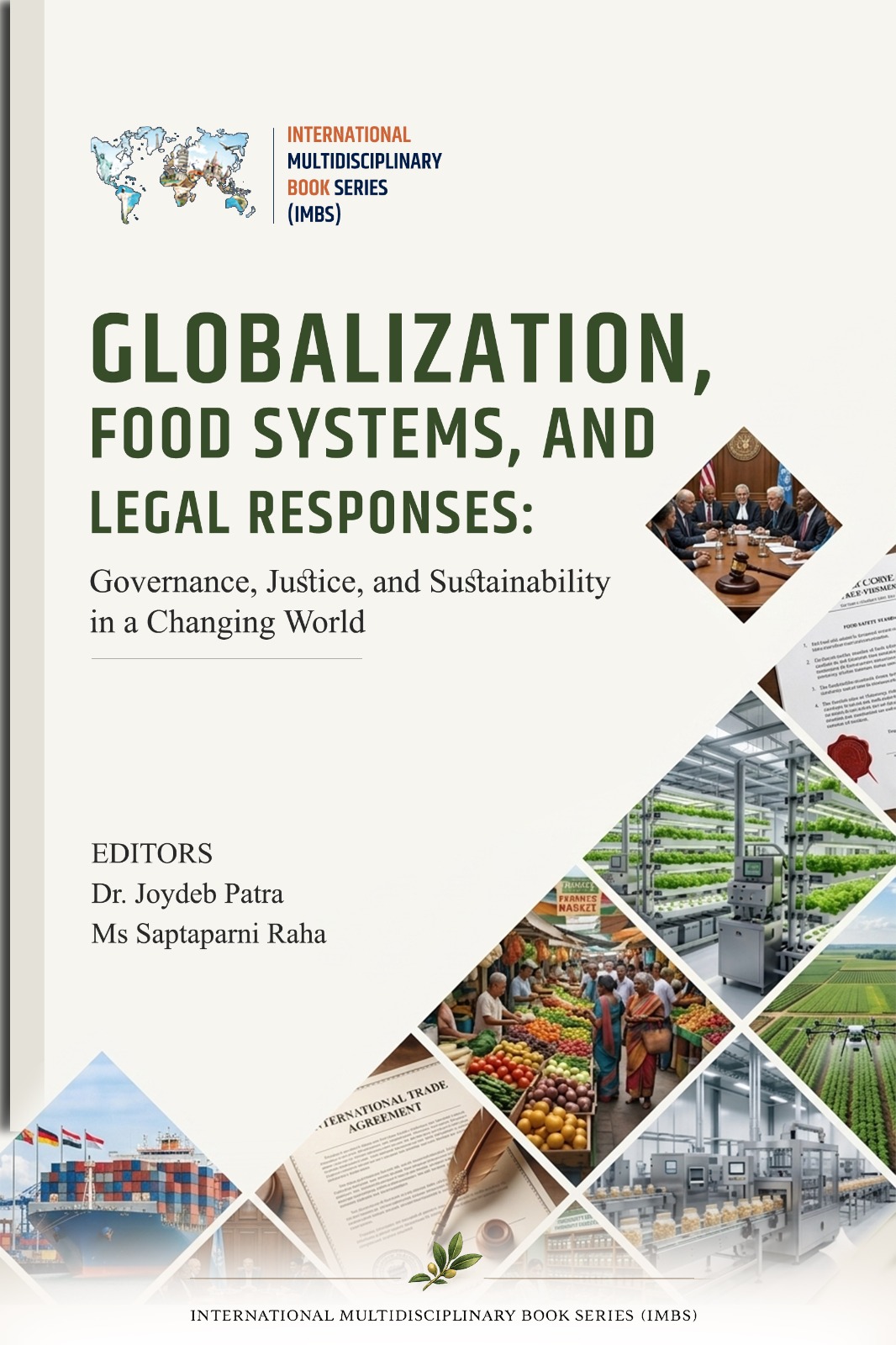
Globalization, Food Systems, and Legal Responses:Governance, Justice, and Sustainability in a Changing World
Edited By: Dr. Joydeb Patra, Ms. Saptaparni Raha
E-ISBN: 978-81-685212-2-3
Food is not merely a biological necessity for survival; it is a foundational element of human dignity, social justice, public health, and sustainable development. In an increasingly globalized world, the governance of food systems has shifted from localized agrarian and community-based structures toward transnational, market-driven, and corporatized frameworks, raising profound legal and ethical questions concerning access, affordability, equity, and sustainability. While globalization has improved food production, logistics, and international trade, it has simultaneously intensified food insecurity, widened socio-economic inequalities, weakened local agricultural autonomy, and concentrated control of food systems in the hands of multinational corporations. Against this backdrop, the right to food has emerged as a critical legal and human rights concern. This chapter examines the right to food through an interdisciplinary legal lens, focusing on international human rights law, constitutional jurisprudence, comparative legal frameworks, and the regulatory implications of globalization. It critically analyses the normative foundations of the right to food under international instruments such as the Universal Declaration of Human Rights, the International Covenant on Economic, Social and Cultural Rights, and related interpretive frameworks, while also examining constitutional recognition and judicial enforcement in multiple jurisdictions. Particular attention is devoted to India’s evolving jurisprudence, especially the transformation of food access from a welfare aspiration into a justiciable constitutional entitlement. The chapter argues that food insecurity is not merely a developmental challenge but a structural legal injustice shaped by unequal governance, inadequate state accountability, market concentration, and fragmented international regulation. It concludes that a robust rights-based approach, integrating constitutional protections, transnational accountability, sustainable governance, and social justice principles, is indispensable for addressing contemporary food injustice in a globalized era.